


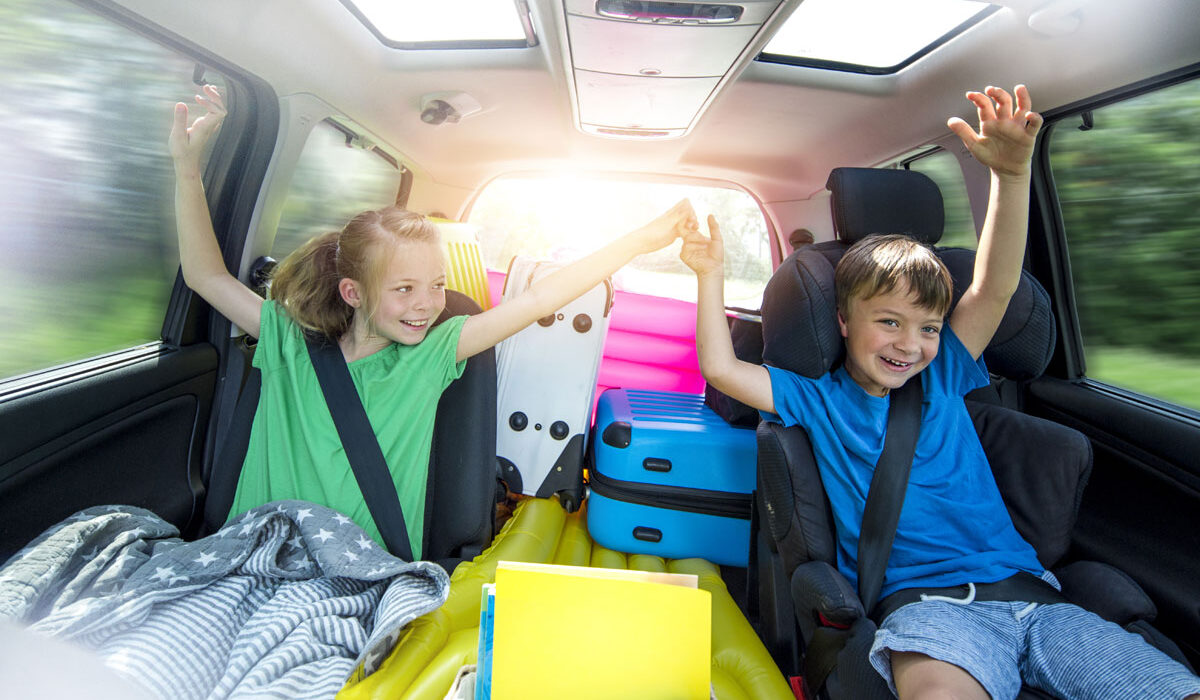
As a driver who takes people to airports every day, I meet all kinds of passengers. But when a family with children gets in – especially when we travel at night or early in the morning – I know exactly what might happen. Calm in the front, a cartoon on the tablet in the back, and after a few kilometres I hear: “Daddy, I feel sick.”
I have been through this many times, and I started looking into it from the perspective of someone who is responsible for passengers' comfort. Why do children feel sick in the car? And why does a tablet so often make it worse?
What exactly is motion sickness?
Motion sickness, put simply, is nausea caused by movement. It happens when the brain receives conflicting signals – for example, the eyes are looking at something that isn't moving (such as a tablet), but the body and the inner ear feel the car moving. The result? The brain gets confused and the child starts to feel sick. It can show up as tiredness, sweating, paleness or even vomiting.
Children are even more sensitive to it than adults – their bodies simply react to these signals faster.
Why a tablet does (not) help
From experience I know that most parents see a tablet as a lifesaver – especially on longer trips, when the kids need to be kept entertained. But the more a child focuses on the screen, the higher the risk of motion sickness. They see a still picture, but the car is moving. For the brain, that is exactly the situation it cannot process.
It's similar to reading a book on a bus or a boat – after a while you start to feel queasy. In children it happens even faster and more strongly.
5 tips to avoid motion sickness
I'm not a doctor, but over the years I have collected a few tips from parents that often worked:
- Looking out of the window – Children who watch their surroundings cope with the journey much better. The view moves the way the car moves, and the brain gets consistent signals.
- Regular breaks – Especially on longer journeys (e.g. Banská Bystrica – Vienna-Schwechat) we stop every two hours. Ten minutes to stretch and get some fresh air is enough.
- A light meal before the ride – Crackers, fruit, something small. Heavy meals or sweets before the journey tend to make things worse.
- Audiobooks and word games – Instead of a screen, many families use audio stories, or we play the classic “I spy with my little eye”. It works better than I expected.
- A seat with a view – If possible, seat children so they can see forward or at least out of the window. Not in the middle between the seats, where they can't see anything at all.
As a driver, I see what makes a trip to the airport a pleasant experience – and what can quickly turn it into a battle with an upset stomach. A tablet is a great helper, but in a car with children it often does more harm than good. Parents who tell me “this time we left the tablet at home” already know why.
If you are planning a long journey – especially at night – think about how your child will cope with it. A healthy child = a calm journey for everyone. And I will be happy to help you get there safely, comfortably and stress-free.
Richard Jaroušek